
Rental Solution for Crowd Control
Crowd Control Barrier Rental in Montreal
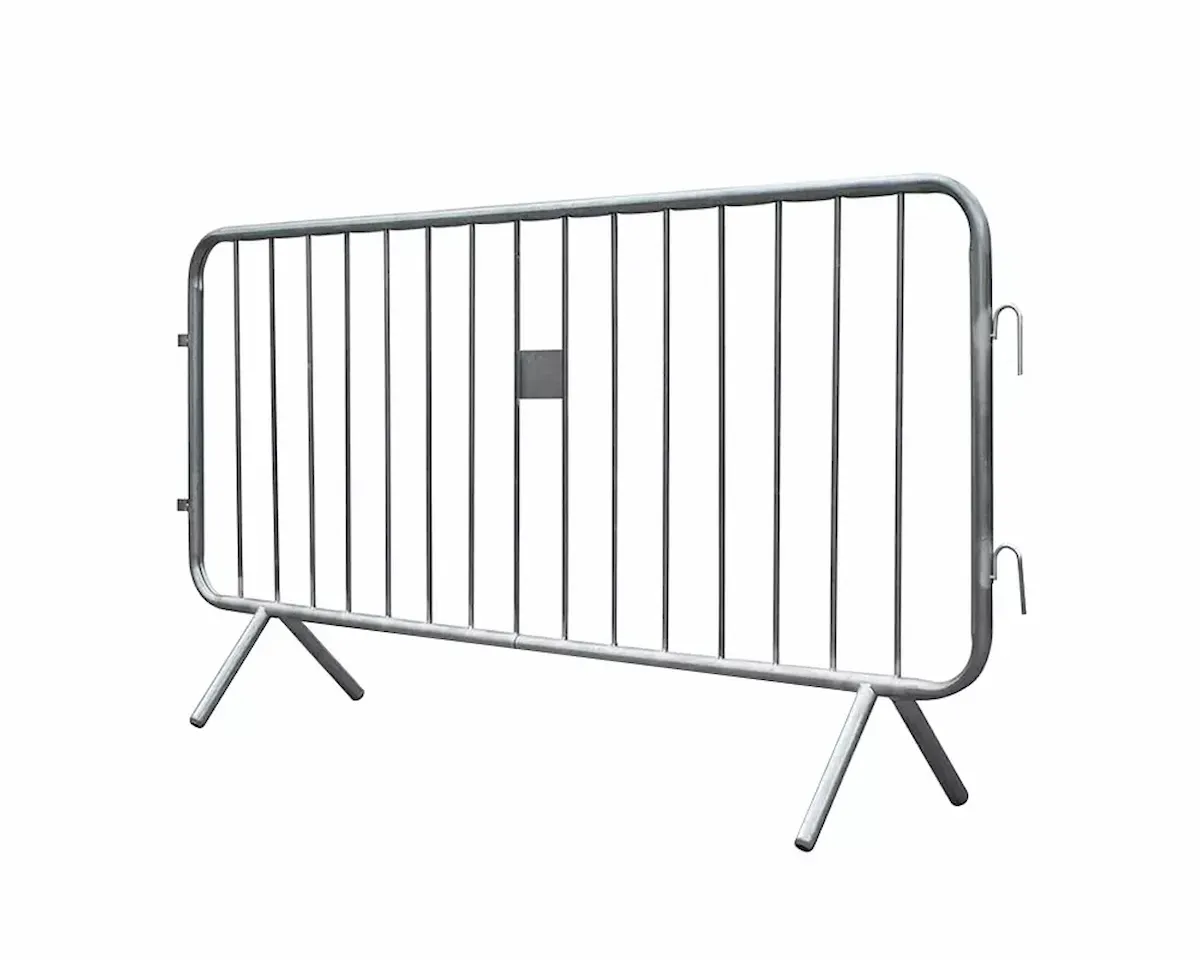
A crowd always ends up leaning on something, and it is better when that was planned for. Sections of 6.9 ft set end to end will hold a perimeter, a closed street or the edge of a site, and they arrive with the rest of your order anywhere in Quebec.
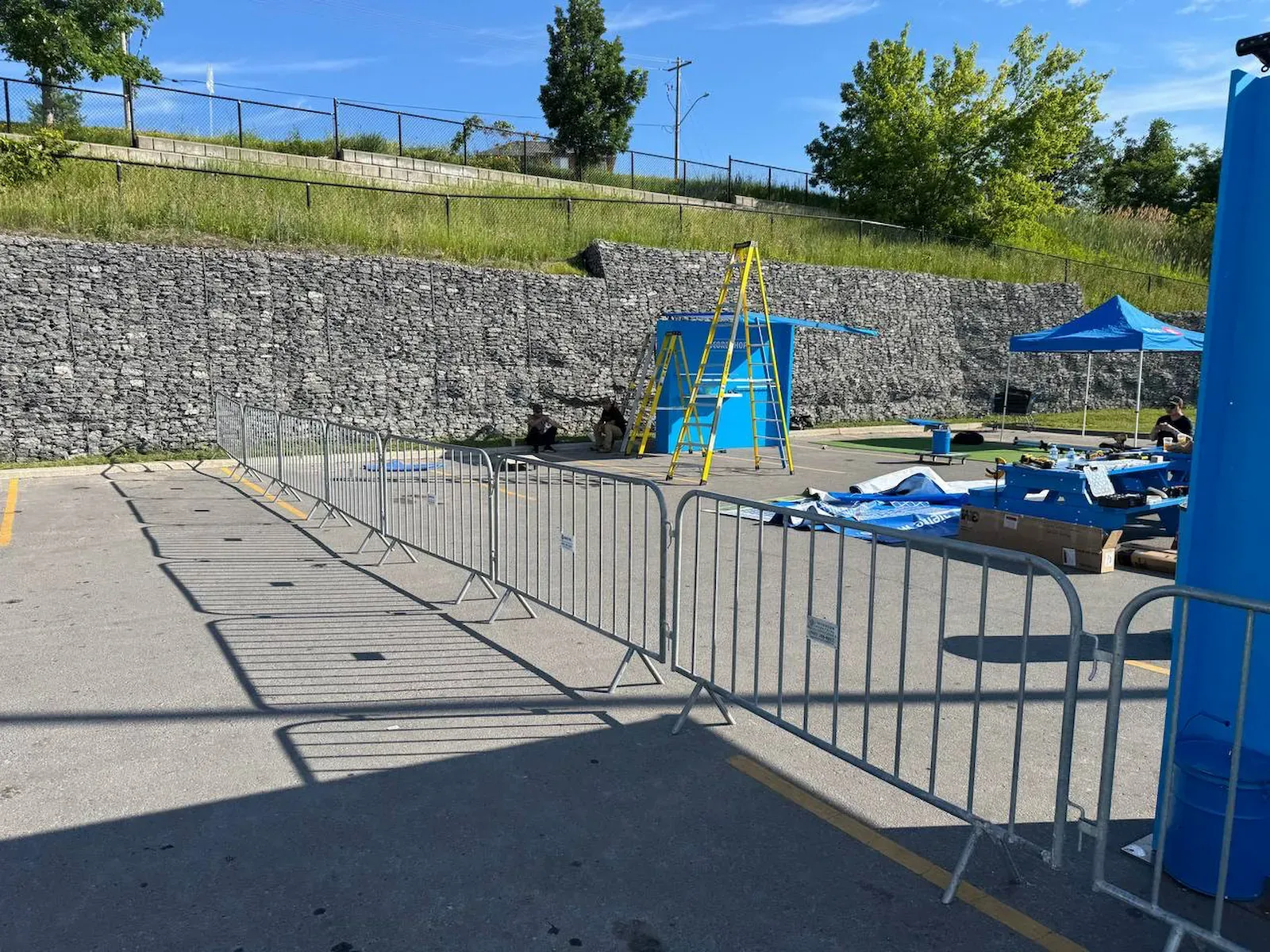
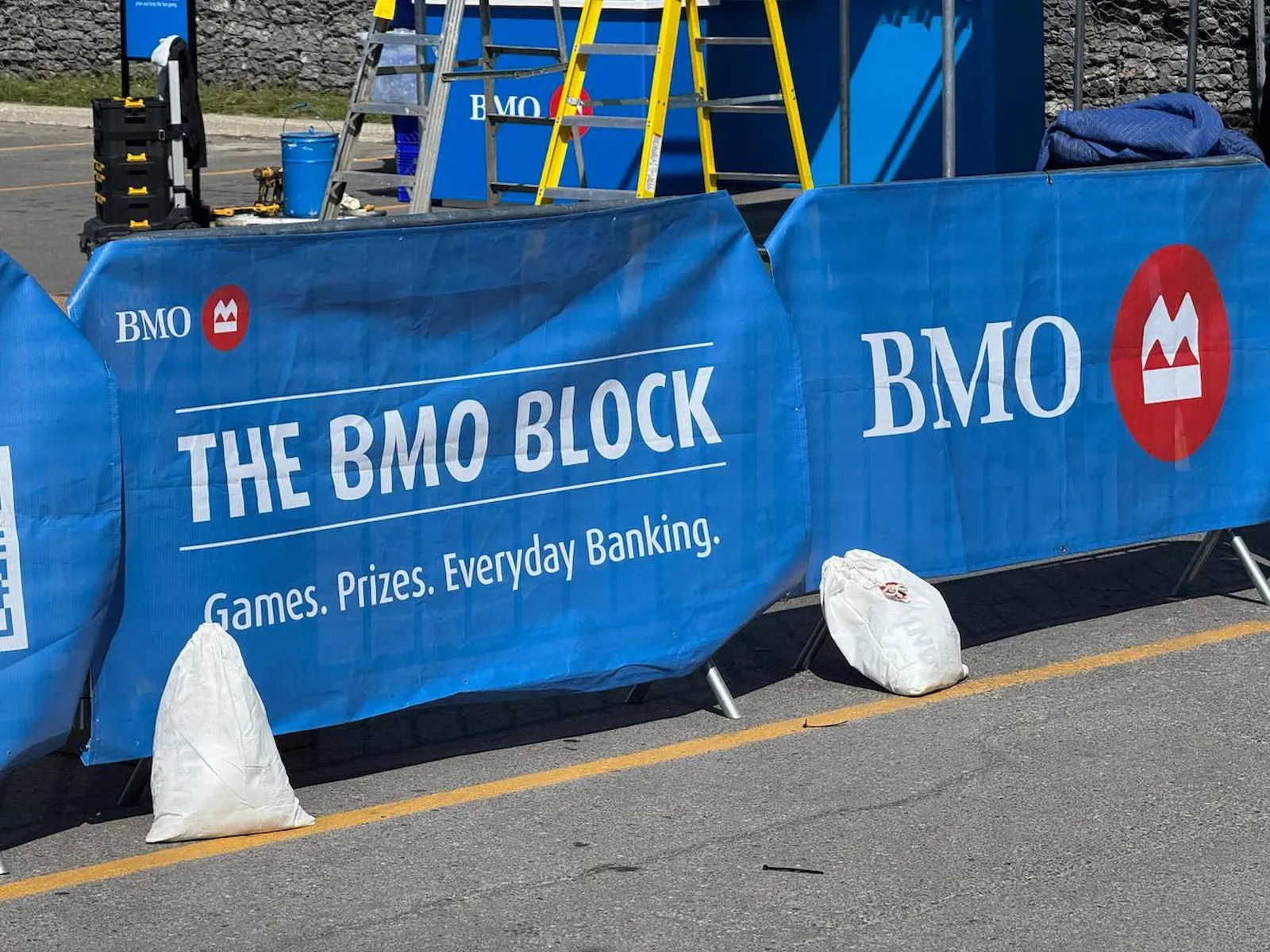
Image 1 of 2
Specifications
| Material | Galvanized steel |
|---|---|
| Section size | 3.6 ft × 6.9 ft |
| Rental period | From 1 day to a month+ |
Our barriers in action
Barriers as they stand on a site during load-in.
Where barriers are used
Barrier takes over the moment the crowd is outside, on its feet, or larger than a roped line can hold. Here is where it ends up, in Montreal and across Quebec:
Closing a festival site
A site needs an edge. The section draws it, keeps the ticket on the right side of it, and holds the curious away from production areas.
Stage surrounds
Wings, cable runs and side stairs are work areas. Barrier closes them without anyone having to stand there.
A street closed for an activation
A laneway or a stretch of road shut for a launch is held with sections, not with cones.
The VIP boundary
The exact point where general admission stops and artists, crew and guests begin.
A queue that overflows
The moment rope stops being enough: doors about to open, and all the weight moving forward.
Outdoor arrivals
Holding a media pen and keeping the public back from an arrival carpet that opens onto the pavement.
Parades and road races
A route has two edges and a dozen side entrances. Sections hold the first two and block the rest.
Load-in and production
Boxing in trucks, generators and cabling so nobody crosses a work area as a shortcut.
Licensed areas
A liquor licence assumes a visible boundary and a single controlled entrance. Barrier is what makes that boundary defensible.
Search points
Splitting arrivals into search lanes and stopping the queue backing up onto the scanners.
Drop-off zones
A shuttle unloading into a stream of pedestrians creates a conflict point. Barrier gives the drop-off its own space.
Barriers or stanchions?
Most events end up with both on site. What separates them comes down to one question: does the line have to take weight?
The stanchion is for people already willing to follow a route — indoor queues, registration lanes, arrivals. It shows the way through; it is not built to hold anything back.
The barrier starts where that assumption breaks down: outdoors, over distance, or anywhere people are going to lean, push and mass against the line rather than walk along it.
An indoor queue instead? See belt stanchions →. A dressed arrival? See rope stanchions →. A stage front, with the crowd pushing for the whole show? That is not this product — see stage barriers →.
How many barriers you need
The unit is the section, never the foot. Each one covers 6.9 ft: divide the length you are closing by 6.9 and round up. A 55 ft laneway takes eight sections; a 95 ft perimeter across the back of a site takes fourteen. Measure the line you actually have to hold rather than the whole footprint — on most sites a wall or a building is already doing a good part of the work.
Openings distort the arithmetic more than anything else. Take a 122 ft line and leave a 10 ft load-in gap 70 ft along: you are no longer closing one length, you are closing two — 70 ft and 42 ft — and each rounds up on its own account, so eleven sections plus seven makes eighteen. Subtracting the opening from the total and dividing would have given seventeen. Every extra opening costs roughly a section in rounding, so count the openings before you count the length.
Then comes the shape, not just the total. Every corner is a joint that has to land square, and every opening — crew access, a load-in lane, an accessible route — is drawn in advance rather than discovered during the build. Send us the line you are holding and every point people or vehicles have to pass through, and the count comes back covering both.
Delivery and setup
Delivery covers the province and collection after the event is part of it — the same truck is never charged to you twice. Barrier is bulky rather than heavy, so the real question on site is almost always the distance between where a vehicle can get to and where the run has to stand.
Send your dates, the number of sections and the event address, and an itemised quote comes back. Festival season and the December corporate evenings are the periods to book ahead for; outside those, there is no minimum notice at all.
FAQ
How much does it cost to rent crowd control barriers in Quebec?
Barriers are quoted by the section, against the length you are holding and the number of days. One section covers 6.9 ft, so the length converts straight into a count as soon as you send us the distance, the corners and where the openings go. The quote comes back as a single final figure, delivery and collection inside it.
Are they suitable for outdoor use?
That is where nearly the whole order goes: festival sites, closed streets, parade routes, activations. Galvanized steel takes the weather, and the sections interlock so the run behaves as one piece rather than a row of separate ones. Tell us the surface and the layout along with your dates, and the section count arrives on the quote.
Who puts the barrier run in place on site?
Your team or ours. Delivery and collection are settled as one arrangement rather than two, and having our crew place the sections is an optional extra on top of that — see Delivery and setup below.
When should a barrier order be sent in?
Festival season and the December corporate evenings are the weeks that fill up, and those are worth booking ahead. Outside those there is no minimum notice: send your dates even if they are close and we will confirm what is available.